
news
Boson AI's Higgs Realtime Duplex renders a live face in 160 ms chunks, and none of its seven published scores measure the video
The 45B mixture-of-experts model generates speech and a talking face from the same output stream, but the benchmark table Boson published covers audio, understanding and instruction following only.
Boson AI's new Higgs Realtime Duplex generates video, specifically a live talking face, and the company published seven benchmark numbers for it, none of which say anything about the quality of that face. The model, introduced on November 5, is described by Boson as the next generation of Higgs Realtime and its first full-duplex interactive omni model, one that listens, watches, talks and renders its own face at the same time in 160 millisecond chunks.
One stream, two renderers, two image latents per chunk
The architecture is the part worth reading closely. The front model is a 45B mixture-of-experts network trained on roughly 2 trillion tokens of text, audio and video. Each output chunk carries two audio frames and two image latents. A causal flow-matching decoder turns the audio frames into speech conditioned on a reference clip, and a causal diffusion transformer turns the latents into video conditioned on a reference image and the previous two latents. Swapping the references changes the voice and the face zero-shot, which makes this an avatar generator with a conversational model attached rather than a chat model with an avatar bolted on. With video enabled, frames keep streaming in during silence, so context fills quickly.
Seven numbers, and the face is not one of them
Boson compares Higgs Realtime Duplex against Thinking Machines Lab's interaction model and the realtime and live model families from OpenAI and Google. The suite spans spoken question answering, full-duplex interaction, joint video and audio understanding, proactive video (the model watches a clip and decides when to speak), agentic task completion and text instruction following. Seven results are listed for Higgs Realtime Duplex, running from 98.9 at the top down to 31.9 at the bottom, with 94.1 on text instruction following. Every one of them scores what the model perceives or says. None scores what it draws. For a system whose distinguishing feature is a rendered face, there is no lip-sync accuracy figure, no temporal consistency measure, no identity-preservation number against the reference image, and no frame rate or resolution for the video decoder.
The size comparison is the clearest claim in the table: Boson's 45B front model against 276B for TML Interaction Small, which the company notes is about six times as many parameters. On cost, the blog says only that the model is built to "cost little," with no published rate, so there is nothing to compare against the per-minute pricing that avatar video vendors normally disclose.
The demo is a meeting, and the meeting is Boson's
The launch video shows the model in a team meeting, presenting an architecture, taking questions mid-sentence, reading a whiteboard and updating a diagram as the conversation continues. It is a company-produced demo of a scenario the company chose, which is standard for a launch and also the reason the missing video metrics matter. Boson has shipped real-time avatar video before, including Higgs Avatar streaming lip-synced video into LiveKit rooms while the agent is still speaking, so the generated-face pipeline is not new to the company; the full-duplex integration is. Avatar-first products have a habit of launching with claims that are not priced or measured, and this one arrives with a detailed model card for everything except the pixels.
A model that produces a face at 160 millisecond granularity invites exactly the questions a video benchmark asks: does the mouth match the phonemes, does the identity drift over a ten-minute call, what happens when the reference image is low quality. Until those numbers exist, the only evidence for the video half of this release is the demo reel.
Sources: Boson AI, Boson AI blog, Boson AI on YouTube.
Cite this
Free to cite and reuse with a link back. Data is updated as new runs and prices come in, so include the date.
Genativity. (2026). Boson AI's Higgs Realtime Duplex renders a live face in 160 ms chunks, and none of its seven published scores measure the video. Retrieved November 7, 2026, from https://genativity.com/news/higgs-realtime-duplex-face-rendering-no-video-scores<a href="https://genativity.com/news/higgs-realtime-duplex-face-rendering-no-video-scores">Boson AI's Higgs Realtime Duplex renders a live face in 160 ms chunks, and none of its seven published scores measure the video</a> (Genativity)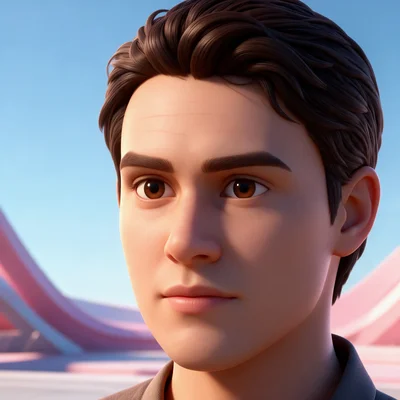
Daniel Ochoa: Covers model launches, shutdowns and pricing changes as they happen. Reads deprecation notices for a living so you do not have to.